
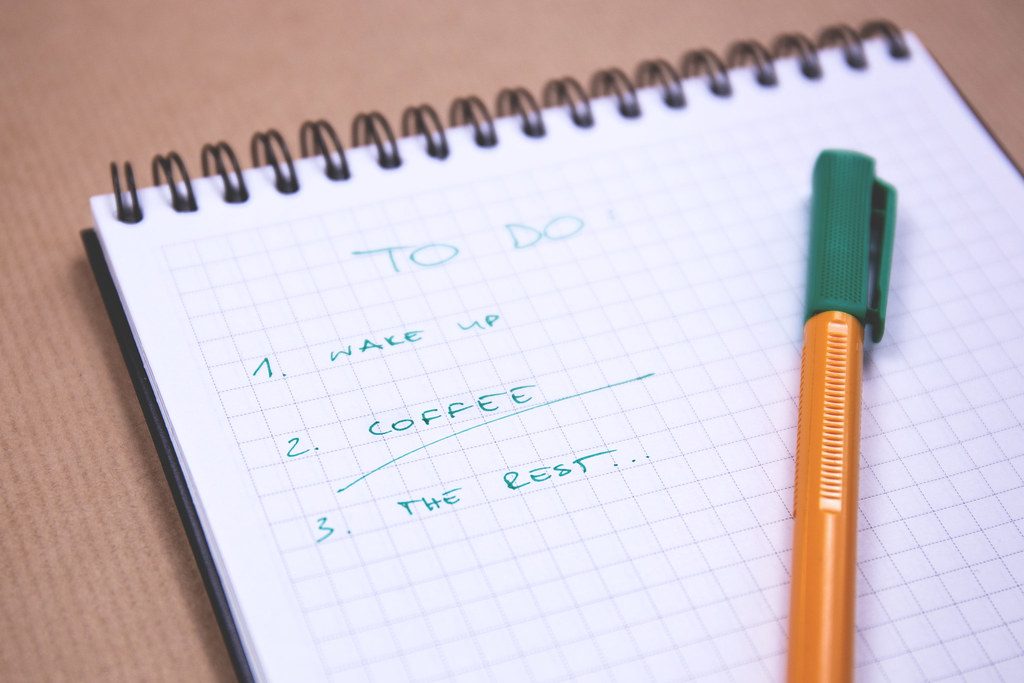
If your to-do list keeps failing — growing endlessly, ignored by lunchtime, making you feel worse — the problem isn’t your discipline. It’s the list. Most to-do lists are built in a way that guarantees they’ll be abandoned. Here’s why your to-do list keeps failing, and a simple fix that makes it usable again.
Why most to-do lists fail
- They’re a dumping ground. A 40-item list isn’t a plan; it’s a guilt machine.
- The items are vague. ‘Sort out taxes’ isn’t a task — it’s a project you’ll avoid.
- No priorities. When everything looks equal, you do the easy stuff and dodge what matters.
- No room for reality. Lists assume a perfect day that never arrives.
The fix: a short daily list with real next actions
Keep your big list of everything separate — that’s a storage place, not your working list. Each day, pull just three important tasks onto a tiny daily list. Three. If you finish them, pull more. Finishing a short list feels like winning; never finishing a long one feels like losing.
Make every item a real next action
Rewrite vague items into the very next physical step. ‘Sort out taxes’ becomes ‘find last year’s tax document.’ A clear next action removes the friction that makes you skip it. If a task feels sticky, it’s usually too big — shrink it.
Prioritise before you start, not during
- The night before, pick tomorrow’s three must-do tasks.
- Put the most important (or most dreaded) one first.
- Do that first task before email and messages eat your morning.
- Treat everything else as a bonus.
FAQ
How many things should be on my to-do list?
On your daily working list, three important tasks. Keep everything else on a separate master list you pull from — don’t carry it all in your face every day.
Paper or app for to-do lists?
Either — whichever you’ll actually check. The format matters far less than keeping the daily list short and the tasks specific.
A better list is part of a bigger system. See our cornerstone on building a productivity system that survives real life, try the 2-minute rule, or browse more Productivity guides.
Keep reading on Super Rat Machine
Start here — core guides
- Managing Money in Your 20s: A Beginner’s Guide
- Build a Productivity System That Survives Real Life
- Plain-English Tech Words You Keep Seeing (2026 Glossary)
- Tiny Habits That Compound: A Realistic Starter Guide
- How to Land a Remote Job From India (and Anywhere Else)
- Budget Travel Playbook: Plan, Book, Pack, Repeat
All articles
Career
- Before You Create a CricketBook ID Check These 10 Important Things
- How to Ask for a Raise: Scripts and Timing
- How to Build a LinkedIn Profile That Gets Noticed
- How to Negotiate Your Salary (Even If You Hate Confrontation)
- Cover Letters Are Dead — Except When They’re Not
- Freelance vs Full-Time Remote: Which Pays Better in India?
- How to Write a Resume That Survives ATS Filters in 2026
- Remote Job Interview: 12 Questions You’ll Be Asked
- How to Land a Remote Job From India (and Anywhere Else)
Habits
- How to Drink More Water: Simple Habits That Work
- How to Build a Reading Habit That Sticks
- 30 Days of Walking 8,000 Steps: An Honest Report
- How to Stop Doomscrolling Without Deleting Every App
- Morning Routines: What the Research Actually Says
- The Cheapest Habit Tracker That Actually Works (Paper)
- Tiny Habits That Compound: A Realistic Starter Guide
Money
- How to Improve Your Credit Score in India (CIBIL Basics)
- Good Debt vs Bad Debt: How to Tell the Difference
- How to Make a Monthly Budget That Actually Works
- How to Build a 3-Month Emergency Fund on a Small Salary
- Tax-Saving Investments for Salaried Employees (Section 80C Recap)
- Health Insurance for First-Time Buyers (India): What to Look For
- SIP vs Lump Sum: The Honest Comparison
- UPI vs Credit Card: When Each One Actually Wins
- Managing Money in Your 20s: A Beginner’s Guide
online batting
- Cricket ID – Complete Account Setup & User Information
- Skyexchange ID – Simple Account Setup Explained
- Getting Started with Laser247 Online for the First Time
- Cricbet99 New ID – Register Online & Login
- Laser247 Online – Important Features to Explore
- Cricbet99 ID – New User Registration Guide
- Playinmatch99 Online: Complete User Guide and Login Tips
- Laser247 ID – What Every New User Should Know
- Laser247 ID – Everything You Need to Know
- Online Cricket ID Provider: Features and Benefits Explained
- Trusted Cricket ID Login Guide: Simple Steps for Safe Account Access
- How to Protect Your Cricket ID Online Account
- Tiger Exchange Guide: Everything You Should Know Before Getting Started
- Tigerexch: Complete Guide to Features, Login & Online Access
online game
- Cricket ID – Complete Account Setup & User Information
- Laser247 Online – Important Features to Explore
- Playinmatch99 Online: Complete User Guide and Login Tips
- Laser247 ID – What Every New User Should Know
- Online Cricket ID Provider: Features and Benefits Explained
- Tiger Exchange Guide: Everything You Should Know Before Getting Started
- Tigerexch: Complete Guide to Features, Login & Online Access
Productivity
- Deep Work vs Shallow Work: How to Protect Your Focus
- How to Beat Procrastination: A Practical, No-Guilt Guide
- The Eisenhower Matrix: Prioritise When Everything Feels Urgent
- The Best Free Note-Taking Apps in 2026
- Time-Blocking for People Who Hate Time-Blocking
- Why Your To-Do List Keeps Failing (and the Fix)
- The 2-Minute Rule, Tested for 30 Days
- Build a Productivity System That Survives Real Life
Tech
- VPNs Explained: What They Do (and What They Don’t)
- Password Managers Explained: Why You Need One in 2026
- How to Spot a Phishing Email: 7 Red Flags
- Best Budget Laptops Under ₹50,000 in 2026: What to Look For
- Two-Factor Authentication: Set It Up in 10 Minutes
- RAM vs Storage vs Cloud: What’s the Difference?
- What Is an LLM, Really? A No-Jargon Explainer
- Plain-English Tech Words You Keep Seeing (2026 Glossary)